Marine Astrolabes Inventory
Introduction
Probably developed in Roman Egypt and later simplified and adapted by the Portuguese to measure the height of the Sun above the horizon in the late 15th century, marine astrolabes are part of the intellectual revolution of the Renaissance and are linked to the European maritime expansion.
Marine astrolabes deserved scholarly attention since the beginning of the 20th century. A first inventory of 10 known marine astrolabes was published by David Waters in 1957, and a second, by the same author, in 1966, describing 21 specimens. In 1983 Alan Stimson presented an inventory with 48 known astrolabes and in 1988 published a book with 65 recorded specimens.

After that there were several specific publications, and in the early 2000s the ShipLAB decided to continue Stimson's work. Not all the astrolabes in Stimson's list were mariner's astrolabes, but we decided to build our inventory from his, and keep all his specimens and numbers.
We hope that the publication of our astrolabe list encourages private collectors to contact us at Texas A&M University and help us inventory, study, and share all the existing mariner's astrolabes.
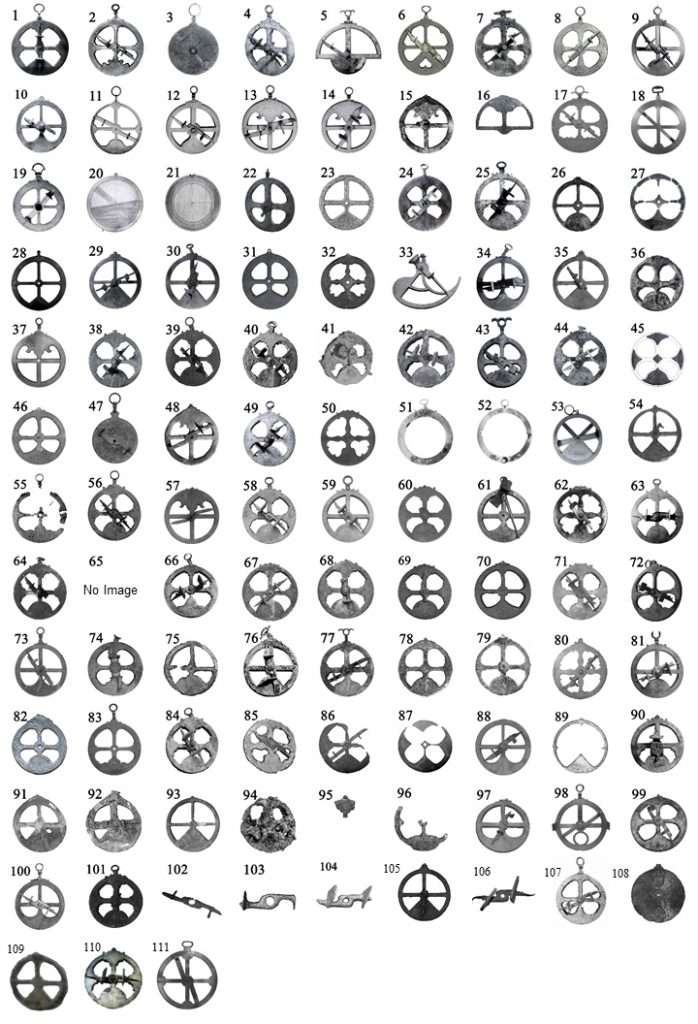
There are 112 astrolabes and parts known. Not all specimens included in this inventory were conceived to be used on board, but we inherited this study and did not change the previous work (Stimson 1988).
Fakes
Because mariner's astrolabes regularly fetch relatively high prices at auction and many auction houses are more interested in their commissions than in ethical questions, some fakes are known to circulate in the market. We would like to inventory those as well, and we encourage the NADL users to contact us with credible stories of fakes.
The fake astrolabe that treasure hunter Robert Marx tried to sell to Spain is an old and well-known story. But sometimes unprovenanced astrolabes make it to the internet, and some look fake.
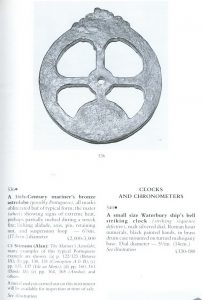
A specimen was sold by Christie's in 1994 is difficult to evaluate (no. 82 in our list). It was presented as "A 16th-Century mariner's bronze astrolabe (possibly Portuguese), all marks obliterated but of typical form; the matter (wheel) showing signs of extreme heat, perhaps partially melted during a wreck fire, lacking alidade, axis, pin, retaining nut, and suspension loop – 6 7/8 in. (17.5 cm) diameter. £2,000-3,000." It was sold for £2,200.
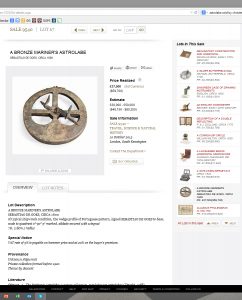
The number of unprovenanced astrolabes that show up in the market suggests a fair amount of looting, sometimes encouraged or instigated by antiques dealers. Peter Watson's books The Medici Conspiracy and Sotheby's, The Inside Story, eloquently illustrate the complicated worlds of antiques dealing.
Taxonomy
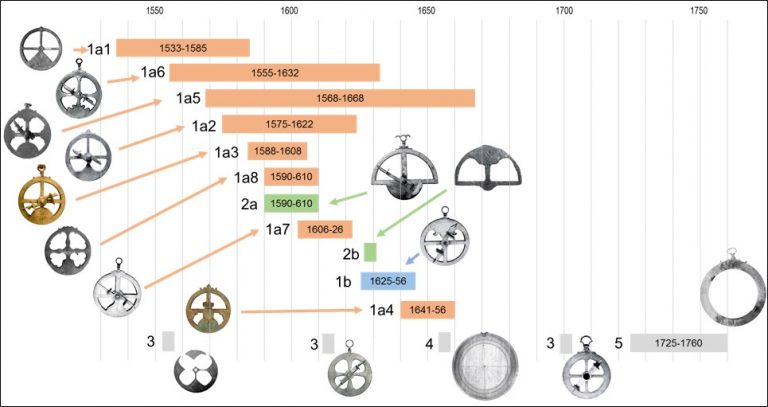
The number of specimens having reached around 100, we defined some sub-classes within Stimson's 1988 taxonomy, as indicated in the figure below.
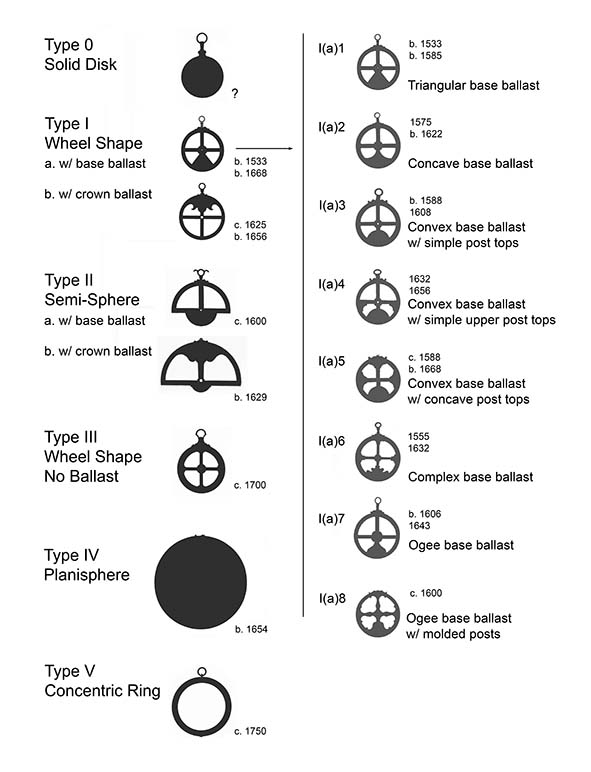
Based on the dates still legible in some specimens and on the dates of the shipwrecks – when the astrolabes come from known shipwrecks – we have established a tentative chronology by types.
References
- Budsberg, N., Jobling, J., and Castro, F., 2016. "Rio Grande do Norte Astrolabe" International Journal of Historical Archaeology, 20.2: 405-421.
- Castro, F., 2023. Underwater Archaeology Database for Portugal. Volume 5. World Astrolabe Inventory. Ship Library (ShipLib): A Maritime Archaeology Database. Universidade de Coimbra.
- Castro, F., Budsberg, N., Jobling, J., and Passen, A., 2015. "The Astrolabe Project." Journal of Maritime Archaeology, 10.3: 205-234.
- Garcia, Gustavo, 2005, The Rincón Astrolabe Shipwreck. MA Thesis, Anthropology. Texas A&M University.
- Stimson, A., 1988. The Mariner's Astrolabe. Utrecht: H&S.